ECSAv10 Exam Questions & Answers
Certified Security Analyst (ECSA) v10 • Eccouncil
100% money-back guarantee
About ECSAv10 Exam
The ECSAv10 (Certified Security Analyst) certification exam by EC-Council represents the latest advancement in cybersecurity professional credentials, validating expertise in security analysis, threat identification, and vulnerability assessment. This comprehensive examination covers critical domains including network security, cryptography, intrusion detection, web application security, and penetration testing methodologies. The ECSAv10 exam is designed for IT professionals, security analysts, system administrators, and cybersecurity enthusiasts who seek to demonstrate advanced competency in identifying security threats and implementing effective countermeasures in organizational environments.
Candidates preparing for the ECSAv10 certification benefit significantly from utilizing updated exam dumps and practice tests that mirror the actual examination format and difficulty level. These resources provide invaluable insight into question patterns, time management strategies, and topic emphasis areas that EC-Council prioritizes. By engaging with practice tests and comprehensive study materials, aspirants can identify knowledge gaps, reinforce challenging concepts, and build confidence before attempting the actual certification exam. Investing in quality preparation resources substantially increases the likelihood of achieving a passing score while ensuring candidates gain practical knowledge applicable to real-world security scenarios.
Exam Topics & Objectives
4-Week Study Plan for ECSAv10
Week 1: Security Analysis Fundamentals & Assessment Planning
- Study Module 1: Security Analysis Concepts and EC-Council Framework
- Study Module 2: Footprinting and Reconnaissance Techniques
- Complete hands-on labs on passive information gathering
- Create flashcards for EC-Council methodology terms
- Review ECSA exam objectives for Modules 1-2
- Practice identifying reconnaissance tools and their uses
- Take practice quiz on footprinting (aim for 80%+)
Week 2: Scanning, Enumeration & Vulnerability Analysis
- Study Module 3: Scanning and Enumeration
- Study Module 4: Vulnerability Analysis
- Complete hands-on labs using Nmap, Nessus, and OpenVAS
- Practice port scanning techniques and service identification
- Study vulnerability assessment methodologies
- Work through CVSS scoring calculations
- Complete practice exam for Modules 3-4 (target 75%+)
- Review and document common vulnerabilities (OWASP Top 10)
Week 3: Security Testing, Web App Analysis & Advanced Concepts
- Study Module 5: Security Testing Phases
- Study Module 6: Web Application Security Testing
- Study Module 7: Advanced Exploitation Techniques
- Complete web application security lab exercises
- Practice SQL injection, XSS, and CSRF attack scenarios
- Study penetration testing report writing
- Review real-world case studies and assessment reports
- Take comprehensive practice exam covering Modules 5-7 (target 78%+)
Week 4: Final Review, Compliance & Exam Preparation
- Study Module 8: Social Engineering and Reporting
- Study Module 9: Compliance and Legal Aspects
- Study Module 10: Remediation and Recommendations
- Study Module 11: Risk Assessment and Management
- Study Module 12: EC-Council Certifications and Career Path
- Complete full-length practice exams (minimum 2, target 80%+)
- Review all weak areas from previous practice tests
- Create summary cheat sheet for exam day
- Review time management strategies and exam format
- Final review of threat modeling and risk calculation methods
Sample ECSAv10 Questions
Practice with real exam-style questions. Reveal answers to verify your knowledge.
In the process of hacking a web application, attackers manipulate the HTTP requests to subvert the application authorization schemes by modifying input fields that relate to the user ID, username, access group, cost, file names, file identifiers, etc.
They first access the web application using a low privileged account and then escalate privileges to access protected resources.What attack has been carried out?
What is a good security method to prevent unauthorized users from "tailgating"?
You work as an IT security auditor hired by a law firm in Boston to test whether you can gain access to sensitiveinformation about the company clients. You have rummaged through their trash and found very little information.
You do not want to set off any alarms on their network, so you plan on performing passivefoot printing against their Web servers.What tool should you use?
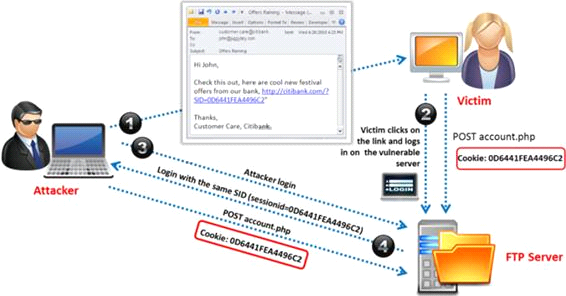
Identify the attack represented in the diagram below:
Internet Control Message Protocol (ICMP) messages occur in many situations, such as whenever a datagram cannot reach the destination or the gateway does not have the buffering capacity to forward a datagram.
Each ICMP message contains three fields: type, code, and checksum. Different types of Internet Control Message Protocols (ICMPs) are identified by a TYPE field.
If the destination is not reachable, which one of the following are generated?
Get access to all 201 verified questions with detailed answers.
Unlock All ECSAv10 Questions