Limited-Time Offer: Enjoy 50% Savings! - Ends In 0d 00h 00m 00s Coupon code: 50OFF
Free Exam Questions

1Z0-149 Exam Questions & Answers

Oracle Database 19c: Program with PL/SQL  •  Oracle

65 Questions 90 min Updated Jul 2026 99% Pass Rate
Get Full Access

100% money-back guarantee

About 1Z0-149 Exam

The 1Z0-149 Oracle Database 19c: Program with PL/SQL certification exam is designed to validate your expertise in developing PL/SQL applications and managing Oracle Database 19c environments. This comprehensive certification covers essential topics including PL/SQL fundamentals, control structures, procedures, functions, packages, triggers, and advanced programming techniques. Candidates will demonstrate proficiency in error handling, cursor management, and performance optimization while working with Oracle's powerful procedural language. The exam is ideal for database developers, system administrators, and IT professionals seeking to enhance their career prospects and prove their technical competency in enterprise database development.

To successfully pass the 1Z0-149 exam, candidates should leverage updated exam dumps and practice tests that mirror the actual test environment and question formats. These study materials provide invaluable insights into real exam scenarios, helping you identify knowledge gaps and build confidence before test day. Practice tests simulate the exact timing and difficulty level of the certification exam, allowing you to refine your test-taking strategies and improve your score. By combining comprehensive study guides with hands-on practice using current exam dumps, you'll strengthen your understanding of PL/SQL concepts and significantly increase your chances of achieving a passing score on your first attempt.

Exam Topics & Objectives

Declaring PL/SQL Variables
Writing Executable Statements
Writing SQL in PL/SQL
Writing Control Structures
Working with Composite Data Types
Using Explicit Cursors
Handling Exceptions
Using PL/SQL Subprograms
Creating Procedures and Using Parameters
Creating Functions
Creating Packages
Working with Packages
Using Dynamic SQL
Design Considerations for PL/SQL Code
Creating Compound, DDL, and Event Database Triggers
Using the PL/SQL Compiler
Managing PL/SQL Code
Managing Dependencies

4-Week Study Plan for 1Z0-149

Week 1: Foundations and Basic Programming

  • Study declaring PL/SQL variables, constants, and anchored declarations (%TYPE and %ROWTYPE)
  • Practice writing executable statements and PL/SQL blocks syntax
  • Create 15 practice programs using basic variable declarations and assignments
  • Learn writing SQL queries within PL/SQL (SELECT INTO statements)
  • Practice implicit cursor usage and SQL%ROWCOUNT, SQL%FOUND attributes
  • Complete hands-on labs for DML statements in PL/SQL context
  • Study control structures: IF/THEN/ELSIF/ELSE and CASE statements
  • Write 10 programs implementing nested IF and CASE logic
  • Review scope and visibility rules for variables
  • Take Week 1 practice quiz on variables, statements, and basic control flow

Week 2: Cursors, Exceptions, and Composite Data Types

  • Study explicit cursor declaration, opening, fetching, and closing
  • Practice cursor loops using LOOP, WHILE LOOP, and FOR LOOP with cursors
  • Create 12 programs using cursor attributes (ISOPEN, FOUND, NOTFOUND, ROWCOUNT)
  • Study parameterized cursors and cursor variable declarations
  • Learn PL/SQL exception handling (predefined and user-defined exceptions)
  • Practice RAISE, RAISE_APPLICATION_ERROR, and exception propagation
  • Write 15 exception handling programs covering multiple scenarios
  • Study composite data types: records, tables, and nested tables
  • Create programs using %ROWTYPE and record type definitions
  • Practice PL/SQL associative arrays and index-by tables
  • Complete Week 2 practice exam on cursors and exceptions

Week 3: Subprograms, Procedures, Functions, and Packages

  • Study PL/SQL subprogram fundamentals and parameter modes (IN, OUT, INOUT)
  • Create 10 procedures with different parameter modes and default values
  • Learn procedure invocation and parameter passing mechanisms
  • Study functions, return values, and restrictions on function usage
  • Write 10 functions for various business logic scenarios
  • Practice using functions in SQL statements (context restrictions)
  • Study package specification and body structure
  • Create 5 complete packages combining procedures and functions
  • Learn package initialization blocks and package state
  • Study forward declarations and mutual recursion in packages
  • Practice overloading procedures and functions within packages
  • Complete hands-on labs for all subprogram types
  • Take Week 3 cumulative practice exam

Week 4: Advanced Topics, Triggers, and Code Management

  • Study dynamic SQL: EXECUTE IMMEDIATE and native dynamic SQL
  • Practice building dynamic SQL statements with proper binding
  • Write 8 programs using USING clause for parameters and RETURNING clause
  • Learn design considerations: code reusability, security, and performance
  • Study naming conventions and coding standards for PL/SQL
  • Learn compound triggers (BEFORE/AFTER, STATEMENT/ROW level)
  • Create 8 different trigger types: DML, DDL, and event triggers
  • Practice trigger order, trigger body restrictions, and mutating table issues
  • Study the PL/SQL compiler: initialization parameters and optimization
  • Learn dependency management and DEPTREE table usage
  • Study methods of managing PL/SQL source code and versioning
  • Practice using DBMS_UTILITY for dependency analysis
  • Complete comprehensive final practice exam covering all 18 topics
  • Review weak areas and do final targeted practice sessions

Sample 1Z0-149 Questions

Practice with real exam-style questions. Reveal answers to verify your knowledge.

Q1 MultipleChoice

Examine the SH.PRODUCTS table:
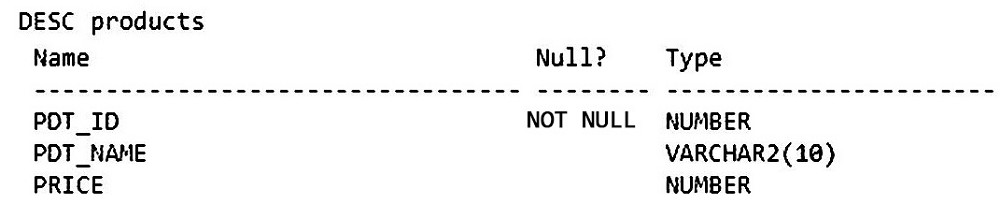
A row exists in SH.PRODUCTS with PDT_ID = 1.

Now, examine this code and output executed by SH:
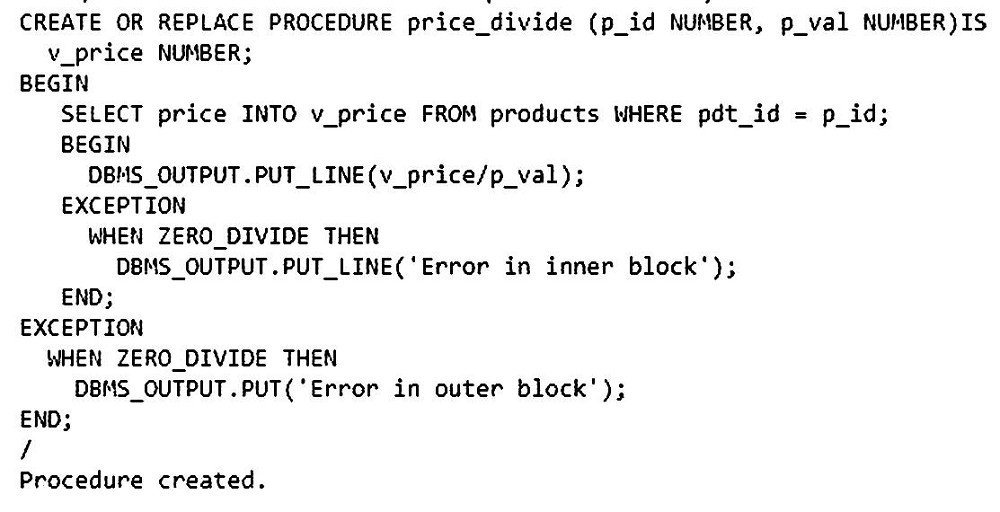
Now, examine this block of code:
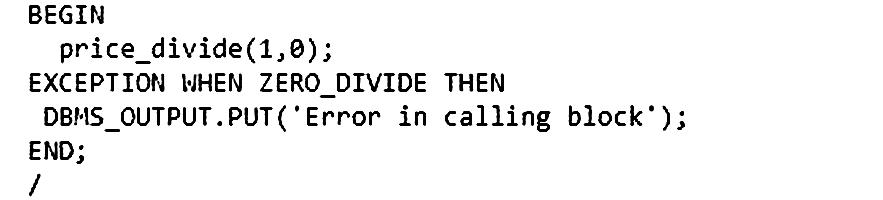
Which error message(s) does it display on execution by user SH?

Q2 MultipleChoice

Examine these statements:
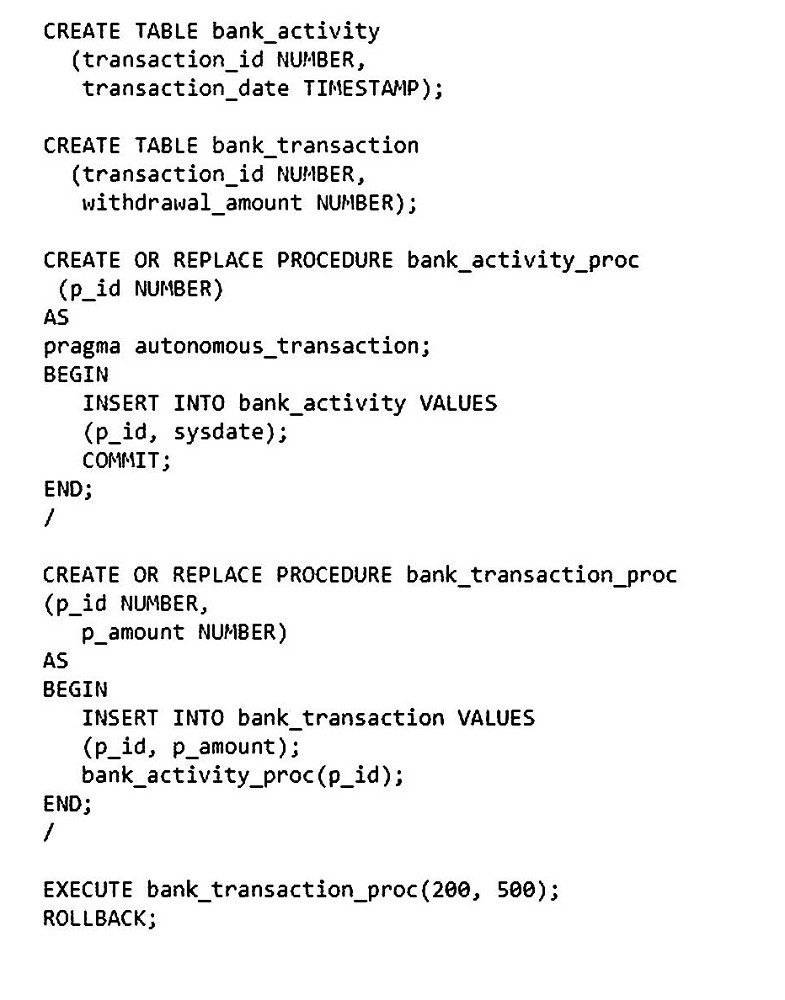
Which two are true? (Choose two.)

Q3 MultipleChoice

Which three are true about the procedure overloading feature? (Choose three.)

Q4 MultipleChoice

Which three statements can process a dynamic multi-row query? (Choose three.)

Q5 MultipleChoice

Which two are true about collections and RECORD types? (Choose two.)

Get access to all 65 verified questions with detailed answers.

Unlock All 1Z0-149 Questions

Frequently Asked Questions

The exam covers PL/SQL fundamentals, control structures, procedures, functions, packages, cursors, exception handling, and database interactions. It also includes topics on triggers, collections, and advanced PL/SQL features used in Oracle Database 19c environments.

The exam typically contains 60-70 questions that must be completed within 120 minutes. The exact passing score is not publicly disclosed by Oracle, but candidates generally need to score around 60-70% to pass, depending on the specific exam version.

Oracle recommends having at least one year of hands-on experience with PL/SQL programming and Oracle Database administration. While not strictly required, prior knowledge of SQL and database concepts is highly beneficial for exam success.

You can register for the exam through Oracle University's official website or Pearson VUE testing centers. The exam cost typically ranges from $245 to $335 USD, though pricing may vary by region and testing center.

Recommended study resources include Oracle's official PL/SQL documentation, Oracle University training courses, practice exams, and third-party study guides from reputable publishers. Hands-on practice with PL/SQL code in an actual Oracle Database 19c environment is essential for thorough preparation.
Exam Details
  • Exam Code1Z0-149
  • VendorOracle
  • Total Questions65
  • Duration90 min
  • LanguageEnglish
  • Last UpdatedJul 22, 2026
4.9/5

Pass 1Z0-149 First Time

Get all 65 exam questions with verified answers and 90-day free updates.

Buy Now & Pass
  • PDF + Practice Test Bundle
  • 90-Day Free Updates
  • 100% Money-Back Guarantee
  • Instant Download
  • 24/7 Customer Support
99% Pass Rate Trusted by 50,000+ IT professionals