1Z0-829 Exam Questions & Answers
Java SE 17 Developer • Oracle
100% money-back guarantee
About 1Z0-829 Exam
The 1Z0-829 Java SE 17 Developer certification exam is Oracle's premier credential for validating advanced Java programming skills and expertise in modern Java development. This comprehensive assessment covers essential topics including Java syntax, object-oriented programming, functional programming with lambdas and streams, exception handling, modules, and concurrent programming. The exam tests developers' ability to write secure, efficient, and maintainable code using Java SE 17 features, making it an industry-recognized benchmark for professional competency in enterprise-level Java development.
Software developers, Java programmers, and IT professionals seeking to advance their careers should pursue the 1Z0-829 certification to demonstrate mastery of current Java standards and best practices. Candidates preparing for this challenging exam benefit significantly from utilizing updated exam dumps, practice tests, and study materials that mirror the actual test format and difficulty level. These resources provide crucial insight into exam patterns, help identify knowledge gaps, and build confidence through realistic scenario-based questions. By combining theoretical study with hands-on practice tests, candidates can effectively prepare for success and earn a certification that enhances their professional credentials and career opportunities in competitive Java development markets.
Exam Topics & Objectives
4-Week Study Plan for 1Z0-829
Week 1: Fundamentals - Data Types, Variables, and Program Flow
- Study handling date and time: LocalDate, LocalTime, LocalDateTime, ZonedDateTime classes and their methods
- Practice text manipulation: String, StringBuilder, StringBuffer classes and common methods (concat, substring, replace, split, trim)
- Learn numeric values: primitive types (int, long, double, float), wrapper classes, and parsing operations
- Understand boolean operations and conditional logic: if-else, ternary operator, logical operators
- Master controlling program flow: switch statements (traditional and enhanced), loops (for, while, do-while, enhanced for)
- Practice 50+ questions covering date/time/text/numeric/boolean topics
- Complete hands-on exercises converting between date/time formats and formatting operations
Week 2: Object-Oriented Programming and Exception Handling
- Study OOP principles: classes, objects, inheritance, polymorphism, encapsulation, abstraction
- Learn class design: constructors, instance/static variables and methods, access modifiers (public, private, protected, package-private)
- Master interfaces and abstract classes: implementation, extension, default methods, static methods
- Understand exception hierarchy: checked vs unchecked exceptions, Exception and RuntimeException classes
- Learn exception handling: try-catch-finally blocks, try-with-resources, throwing exceptions, custom exceptions
- Study multi-catch blocks and exception chaining
- Practice 60+ questions on OOP and exception handling scenarios
- Create sample programs implementing inheritance hierarchies and exception handling mechanisms
Week 3: Collections, Streams, Lambda, and Functional Programming
- Master Arrays: creation, initialization, manipulation, multidimensional arrays, System.arraycopy()
- Study Collections Framework: List (ArrayList, LinkedList), Set (HashSet, TreeSet), Map (HashMap, TreeMap)
- Learn Collection methods: add, remove, contains, iteration, sorting, searching
- Understand Comparator and Comparable interfaces for custom sorting
- Learn lambda expressions: syntax, functional interfaces, method references
- Master Streams API: creating streams, intermediate operations (filter, map, flatMap, distinct, sorted), terminal operations (collect, forEach, reduce, count)
- Practice stream collectors: Collectors.toList(), toSet(), joining(), groupingBy(), partitioningBy()
- Complete 70+ questions on collections and streams with complex filtering/transformation scenarios
- Write programs using method references and functional interfaces (Predicate, Function, Consumer, Supplier)
Week 4: Modules, Concurrency, I/O, JDBC, and Localization
- Study Java Platform Module System: module declaration (module-info.java), requires, exports, opens directives
- Learn packaging and deployment: JAR files, classpath, module path, running modular applications
- Master concurrent execution: Thread class, Runnable interface, thread lifecycle, synchronization (synchronized keyword, locks)
- Study Collections for concurrency: ConcurrentHashMap, CopyOnWriteArrayList
- Learn Java I/O API: File class, Files utility class, BufferedReader/Writer, FileInputStream/OutputStream
- Master character encoding and byte streams vs character streams
- Study JDBC fundamentals: DriverManager, Connection, Statement, PreparedStatement, ResultSet
- Practice JDBC operations: executing queries, updates, handling ResultSet, connection pooling basics
- Learn Localization: Locale class, ResourceBundle, properties files, date/number/currency formatting with locale awareness
- Complete 80+ exam-style questions covering all topics from weeks 1-4
- Take full-length practice exams (2-3 complete 90-minute tests) and review performance
Sample 1Z0-829 Questions
Practice with real exam-style questions. Reveal answers to verify your knowledge.
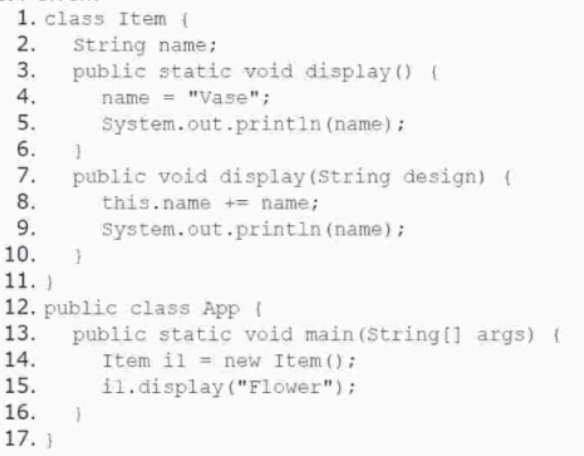
Given:

Which action enables the code to compile?
Which two code fragments compile?
A)

B)
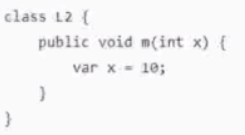
C)
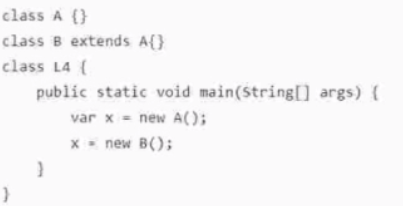
D)
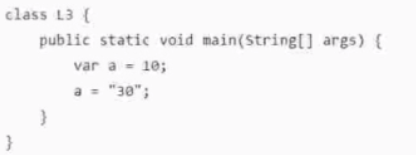
E)
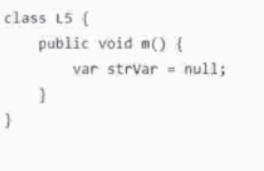
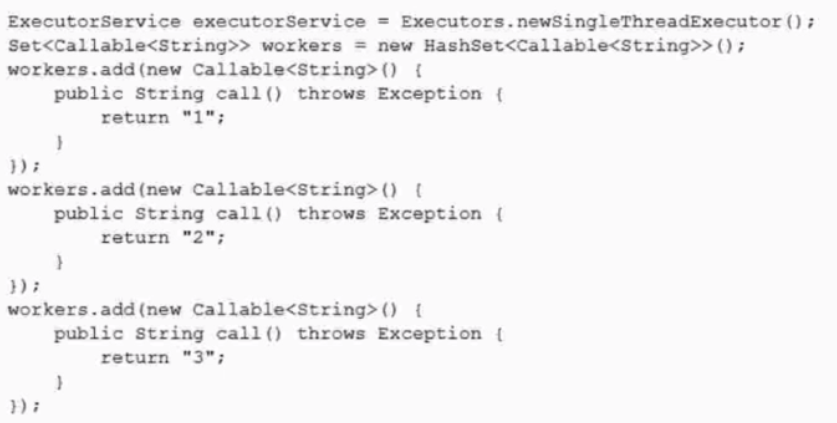
Given the code fragment:

Which code fragment invokes all callable objects in the workers set?
A)

B)

C)

D)

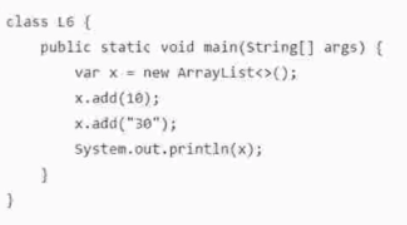
Given the code fragment:
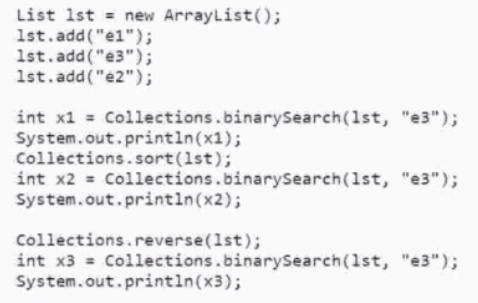
What is the result?
Given the code fragment:

What is the result?
Get access to all 50 verified questions with detailed answers.
Unlock All 1Z0-829 Questions