Professional-Machine-Learning-Engineer Exam Questions & Answers
Google Professional Machine Learning Engineer • Google
100% money-back guarantee
Sample Professional-Machine-Learning-Engineer Questions
Practice with real exam-style questions, each with the verified correct answer and explanation.
Your team is working on an NLP research project to predict political affiliation of authors based on articles they have written. You have a large training dataset that is structured like this:
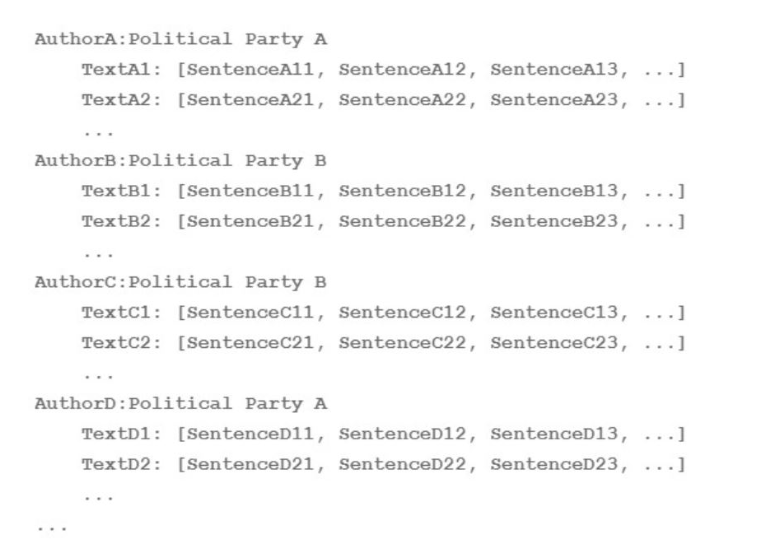
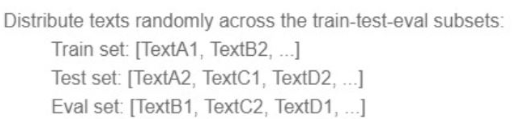
You followed the standard 80%-10%-10% data distribution across the training, testing, and evaluation subsets. How should you distribute the training examples across the train-test-eval subsets while maintaining the 80-10-10 proportion?
A)
B)

C)

D)

The best way to distribute the training examples across the train-test-eval subsets while maintaining the 80-10-10 proportion is to use option C. This option ensures that each subset contains a balanced and representative sample of the different classes (Democrat and Republican) and the different authors. This way, the model can learn from a diverse and comprehensive set of articles and avoid overfitting or underfitting. Option C also avoids the problem of data leakage, which occurs when the same author appears in more than one subset, potentially biasing the model and inflating its performance. Therefore, option C is the most suitable technique for this use case.
You lead a data science team at a large international corporation. Most of the models your team trains are large-scale models using high-level TensorFlow APIs on AI Platform with GPUs. Your team usually
takes a few weeks or months to iterate on a new version of a model. You were recently asked to review your team's spending. How should you reduce your Google Cloud compute costs without impacting the model's performance?
Option A is incorrect because using AI Platform to run distributed training jobs with checkpoints does not reduce the compute costs, but rather increases them by using more resources and storing the checkpoints.
Option B is incorrect because using AI Platform to run distributed training jobs without checkpoints may reduce the compute costs, but it also risks losing the progress of the training if the job fails or is interrupted.
Option C is correct because migrating to training with Kubeflow on Google Kubernetes Engine, and using preemptible VMs with checkpoints can reduce the compute costs significantly by using cheaper and more scalable resources, while also preserving the state of the training with checkpoints.
Option D is incorrect because using preemptible VMs without checkpoints may reduce the compute costs, but it also risks losing the training progress if the VMs are preempted.
Kubeflow on Google Cloud
Using preemptible VMs and GPUs
Saving and loading models
You work for a large retailer and you need to build a model to predict customer churn. The company has a dataset of historical customer data, including customer demographics, purchase history, and website activity. You need to create the model in BigQuery ML and thoroughly evaluate its performance. What should you do?
Customer churn is a binary classification problem, where the target variable is whether a customer has churned or not. Therefore, a logistic regression model is more suitable than a linear regression model, which is used for regression problems.A logistic regression model can output the probability of a customer churning, which can be used to rank the customers by their churn risk and take appropriate actions1.
BigQuery ML is a service that allows you to create and execute machine learning models in BigQuery using standard SQL queries2.You can use BigQuery ML to create a logistic regression model for customer churn prediction by using theCREATE MODELstatement and specifying theLOGISTIC_REGmodel type3.You can use the historical customer data as the input table for the model, and specify the features and the label columns3.
Vertex AI Model Registry is a central repository where you can manage the lifecycle of your ML models4.You can import models from various sources, such as BigQuery ML, AutoML, or custom models, and assign them to different versions and aliases4. You can also deploy models to endpoints, which are resources that provide a service URL for online prediction.
By registering the BigQuery ML model in Vertex AI Model Registry, you can leverage the Vertex AI features to evaluate and monitor the model performance4. You can use Vertex AI Experiments to track and compare the metrics of different model versions, such as accuracy, precision, recall, and AUC. You can also use Vertex AI Explainable AI to generate feature attributions that show how much each input feature contributed to the model's prediction.
The other options are not suitable for your scenario, because they either use the wrong model type, such as linear regression, or they do not use Vertex AI to evaluate the model performance, which would limit the insights and actions you can take based on the model results.
Logistic Regression for Machine Learning
Introduction to BigQuery ML | Google Cloud
Creating a logistic regression model | BigQuery ML | Google Cloud
Introduction to Vertex AI Model Registry | Google Cloud
[Deploy a model to an endpoint | Vertex AI | Google Cloud]
[Vertex AI Experiments | Google Cloud]
You work as an analyst at a large banking firm. You are developing a robust, scalable ML pipeline to train several regression and classification models. Your primary focus for the pipeline is model interpretability. You want to productionize the pipeline as quickly as possible What should you do?
According to the official exam guide1, one of the skills assessed in the exam is to ''automate and orchestrate ML pipelines using Cloud Composer''.Cloud Composer2is a fully managed workflow orchestration service that uses Apache Airflow to create, schedule, monitor, and manage workflows. Cloud Composer allows you to build custom training pipelines for deep learning-based models and integrate them with other Google Cloud services.You can also use Cloud Composer to implement model interpretability techniques, such as feature attributions, explainable AI, or model debugging3. The other options are not relevant or optimal for this scenario.Reference:
Professional ML Engineer Exam Guide
Cloud Composer
Model interpretability with Cloud Composer
Google Professional Machine Learning Certification Exam 2023
Latest Google Professional Machine Learning Engineer Actual Free Exam Questions
You are training models in Vertex Al by using data that spans across multiple Google Cloud Projects You need to find track, and compare the performance of the different versions of your models Which Google Cloud services should you include in your ML workflow?
Vertex AI Pipelines is a service that allows you to orchestrate and automate your machine learning (ML) workflows using pipelines1.A pipeline is a description of an ML workflow, including all of the components in the workflow, how the components are connected as a graph, and the runtime parameters that the pipeline accepts1.Vertex AI Pipelines helps you manage the end-to-end lifecycle of your ML projects, from data preprocessing to model deployment1.
Vertex AI Feature Store is a service that enables you to serve, share, and reuse ML features across different models and projects2.A feature is a measurable property or characteristic of an entity, such as the age of a person or the price of a product2.Vertex AI Feature Store helps you reduce data duplication, ensure data consistency, and improve model performance2.
Vertex AI Experiments is a service that helps you track and compare the performance of different versions of your models3.You can use Vertex AI Experiments to run multiple training jobs with different hyperparameters, architectures, or data sources, and then compare the results using metrics, visualizations, and reports3.Vertex AI Experiments helps you identify the best model for your use case and optimize your model performance3.Reference:
Vertex AI Pipelines | Google Cloud
Vertex AI Feature Store | Google Cloud
Vertex AI Experiments | Google Cloud
Get access to all 283 verified questions with detailed answers.
Unlock All Professional-Machine-Learning-Engineer Questions