PEGACPDC88V1 Exam Questions & Answers
Certified Pega Decisioning Consultant 8.8 • Pegasystems
100% money-back guarantee
Sample PEGACPDC88V1 Questions
Practice with real exam-style questions, each with the verified correct answer and explanation.
MyCo, a mobile company, uses Pega Customer Decision Hub to display offers to customers on its website. The company wants to present more relevant offers to customers based on customer behavior. The following diagram is the action hierarchy in the Next-Best-Action Designer.
The company wants to present offers from both the groups and arbitrate across the two groups to select the best offer based on customer behavior.
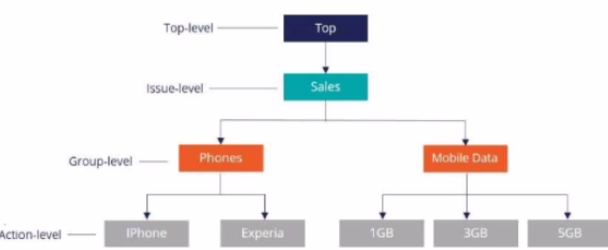
The company wants to present offers from both the groups and arbitrate across the two groups to select the best offer based on customer behavior.
As a decisioning architect, what do you configure to select the best offer from both groups based on customer behavior?
MyCo, a mobile company, uses Pega Customer Decision Hub to display offers to customers on its website. The company wants to present more relevant offers to customers based on customer behavior. The following diagram is the action hierarchy in the Next-Best-Action Designer.
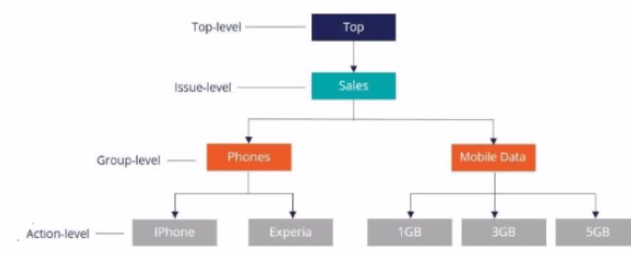
The company wants to present offers from both the groups and arbitrate across the two groups to select the best offer based on customer behavior.
As a decisioning architect, what must you do to present offers from the two groups?
As a Customer Service Representative, you present an offer to a customer who called to learn more about a new product. The customer rejects the offer. What is the next step that Pega Customer Decision Hub takes?
Pega Customer Decision Hub is a dynamic and adaptive system that constantly reevaluates the Next-Best-Action for each customer based on their interactions and feedback. If a customer rejects an offer, the system will update the customer profile and the offer performance, and then reapply the Next-Best-Action strategy to select and prioritize another offer that is more relevant and valuable for the customer. Verified Reference: [Pega Decisioning Consultant | Pega Academy]
A bank has been running traditional marketing campaigns for many years. One such campaign sends an offer email to qualified customers on day one. On day five, the bank presents a similar offer if the first email is ignored.
If you re-implement this requirement by using the always-on outbound customer engagement paradigm, how do you approach this scenario?
The always-on outbound customer engagement paradigm relies on AI to select the best action for each customer at any given time, based on their profile, context, and behavior. You do not need to create separate segments or schedules for different offers or timings. You can configure the primary schedule to run daily and let the AI choose the best action based on engagement policies, such as contact policies, eligibility rules, suitability rules, and arbitration. The AI will also learn from the customer responses and optimize the action selection over time.
U+ Bank wants to offer credit cards only to low-risk customers. The customers are divided into various risk segments from Good to Very Poor. The risk segmentation rules that the business provides use the Average Balance and the customer Credit Score.
As a decisioning architect, you decide to use a decision table and a decision strategy to accomplish this requirement in Pega Customer Decision Hub.
Using the decision table, which label is returned for a customer with a credit score of 240 and an average balance 35000?
Using the decision table, you can find the label for a customer with a credit score of 240 and an average balance of 35000 by following these steps:
Start from the top row and check if the customer's credit score is less than 150. If yes, then the label is Very Poor. If no, then move to the next row.
Check if the customer's credit score is less than 175 and their average balance is less than 25000. If yes, then the label is Poor. If no, then move to the next row.
Check if the customer's credit score is less than 200 and their average balance is less than 50000. If yes, then the label is Fair. If no, then move to the next row.
Check if the customer's credit score is less than 250 and their average balance is less than 75000. If yes, then the label is Good. If no, then move to the last row.
The last row applies to all other cases that do not match any of the previous conditions. The label for this row is Very Poor.
In this case, the customer's credit score is not less than 150, so the first row does not apply. The customer's credit score is less than 175, but their average balance is not less than 25000, so the second row does not apply either. The customer's credit score is not less than 200, so the third row does not apply. The customer's credit score is less than 250 and their average balance is less than 75000, so the fourth row applies. Therefore, the label for this customer is Poor.
Get access to all 60 verified questions with detailed answers.
Unlock All PEGACPDC88V1 Questions