200-201 Exam Questions & Answers
Understanding Cisco Cybersecurity Operations Fundamentals • Cisco
100% money-back guarantee
About 200-201 Exam
The Cisco 200-201 certification exam, officially titled Understanding Cisco Cybersecurity Operations Fundamentals, is designed to validate essential knowledge in cybersecurity operations and threat detection. This exam covers critical topics including security concepts, network security, endpoint protection, secure network access, cryptography, and incident response procedures. Candidates will demonstrate their ability to analyze security events, identify threats, and implement defensive measures using Cisco security tools and platforms. The 200-201 exam is ideal for IT professionals, security analysts, network administrators, and individuals pursuing a career in cybersecurity operations who need to establish foundational expertise in protecting organizational networks and systems.
Preparing effectively for the 200-201 exam requires comprehensive study materials and hands-on practice. Updated exam dumps and practice tests are invaluable resources that help candidates become familiar with the exam format, question types, and required knowledge areas. These practice assessments allow learners to identify knowledge gaps, reinforce difficult concepts, and build confidence before attempting the actual certification exam. By combining official Cisco learning resources with quality practice tests and exam simulations, candidates can significantly improve their chances of passing the 200-201 certification and advancing their cybersecurity operations career.
Exam Topics & Objectives
4-Week Study Plan for 200-201
Week 1: Security Foundations & Monitoring Basics
- Study CIA triad, defense in depth, and zero trust architecture principles
- Learn common attack vectors: malware, phishing, social engineering, DoS/DDoS
- Understand vulnerability vs. threat vs. risk definitions
- Review security baseline concepts and compliance requirements
- Introduction to security monitoring architecture and SOC operations
- Study SIEM fundamentals and log aggregation concepts
- Practice identifying security events vs. security incidents
- Complete practice questions on Security Concepts (20%) and first half of Security Monitoring (25%)
Week 2: Advanced Monitoring & Host Analysis Introduction
- Deep dive into security monitoring tools: firewalls, IDS/IPS, and proxies
- Study alert tuning, false positives, and incident severity classification
- Learn about correlation rules and event normalization
- Introduction to Windows and Linux file systems and registry basics
- Study process execution, system calls, and kernel interactions
- Learn Windows Event Viewer and common event IDs (4688, 4624, 4625, 4720)
- Practice analyzing Windows Security logs for suspicious activity
- Complete practice questions on Security Monitoring (25%) and Host-Based Analysis (20%)
Week 3: Host Analysis Deep Dive & Network Intrusion Foundation
- Advanced Windows forensics: registry artifacts, prefetch files, MFT examination
- Study Linux log analysis: /var/log/auth.log, /var/log/syslog examination
- Learn process memory analysis and malware indicators of compromise (IOC)
- Study network fundamentals: TCP/IP, DNS, HTTP/HTTPS protocols
- Introduction to packet analysis and Wireshark basics
- Learn network intrusion detection concepts and IDS/IPS signatures
- Study common network attacks: port scanning, reconnaissance, exploitation
- Practice analyzing PCAP files for suspicious network activity
- Complete practice questions on Host-Based Analysis (20%) and Network Intrusion Analysis (20%)
Week 4: Network Analysis, Policies & Comprehensive Review
- Advanced packet analysis: protocol behavior, anomaly detection, traffic patterns
- Study command and control (C2) communication detection techniques
- Learn data exfiltration identification in network traffic
- Review security policy frameworks: least privilege, separation of duties, acceptable use
- Study incident response procedures, disaster recovery, and business continuity
- Learn compliance and regulatory requirements: HIPAA, PCI-DSS, GDPR basics
- Study change management and configuration management processes
- Take full-length practice exams covering all five domains
- Review weak areas and retake targeted practice questions
- Final review of all 200-201 objectives and exam tips
Sample 200-201 Questions
Practice with real exam-style questions. Reveal answers to verify your knowledge.
What is the purpose of command and control for network-aware malware?
A network engineer discovers that a foreign government hacked one of the defense contractors in their home country and stole intellectual property. What is the threat agent in this situation?
Which regular expression matches "color" and "colour"?
Refer to the exhibit

An engineer is analyzing DNS response packets that are larger than expected The engineer looks closer and notices a lack of appropriate DNS queries What is occurring?
Refer to the exhibit.
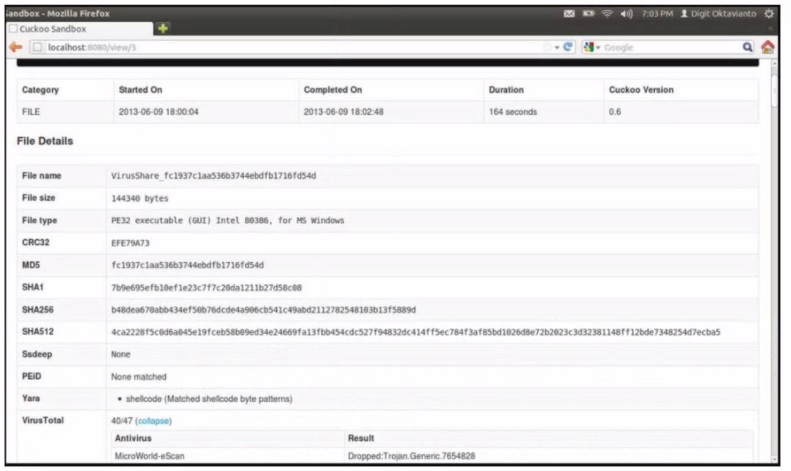
What does this Cuckoo sandbox report indicate?
Get access to all 451 verified questions with detailed answers.
Unlock All 200-201 Questions
