DS0-001 Exam Questions & Answers
CompTIA DataSys+ Certification Exam • CompTIA
100% money-back guarantee
About DS0-001 Exam
The DS0-001 CompTIA DataSys+ Certification Exam is a cutting-edge credential designed for IT professionals seeking to validate their expertise in data systems management and infrastructure. This comprehensive certification evaluates your knowledge across critical domains including data center operations, storage solutions, data protection, and system performance optimization. The DS0-001 exam covers essential topics such as infrastructure components, data management best practices, security protocols, and emerging technologies that shape modern data environments. By earning this credential, professionals demonstrate their ability to design, implement, and maintain robust data systems that meet organizational requirements and industry standards.
The DS0-001 certification is ideal for systems administrators, data center technicians, IT infrastructure specialists, and professionals aspiring to advance their careers in data systems management. To excel on this challenging exam, candidates benefit significantly from utilizing updated exam dumps and comprehensive practice tests that mirror the actual test format and difficulty level. These study resources provide hands-on experience with real-world scenarios, helping candidates identify knowledge gaps and build confidence before test day. Practice tests simulate the exam environment, allowing you to manage time effectively and master complex topics. By combining official CompTIA study materials with quality exam dumps and practice assessments, candidates can maximize their preparation efforts and significantly increase their chances of achieving a passing score on the DS0-001 certification exam.
Exam Topics & Objectives
4-Week Study Plan for DS0-001
Week 1: Database Fundamentals & Architecture
- Study relational database concepts and ACID properties
- Learn SQL basics: SELECT, INSERT, UPDATE, DELETE statements
- Review data types, normalization (1NF, 2NF, 3NF), and schema design
- Understand indexing strategies and query optimization fundamentals
- Practice identifying database objects: tables, views, stored procedures, triggers
- Complete 20 practice questions on Database Fundamentals
- Create a reference guide for common SQL queries and syntax
Week 2: Database Deployment & Configuration
- Study database installation and initial configuration procedures
- Learn about connection strings and client-server connectivity
- Review database sizing and capacity planning requirements
- Understand backup and restore procedures during deployment
- Study high availability setup considerations during deployment phase
- Learn about version compatibility and upgrade paths
- Complete 25 practice questions on Database Deployment
- Practice hands-on lab exercises for database instance creation
Week 3: Management, Maintenance & Business Continuity
- Study routine maintenance tasks: defragmentation, statistics updates, integrity checks
- Learn backup strategies: full, differential, incremental, and transaction log backups
- Review recovery models and point-in-time recovery procedures
- Understand disaster recovery planning and RTO/RPO metrics
- Study replication and failover clustering for high availability
- Learn monitoring and performance tuning best practices
- Complete 35 practice questions covering Management, Maintenance, and Business Continuity
- Create disaster recovery plan templates and checklists
Week 4: Security & Comprehensive Review
- Study authentication methods and user access controls
- Learn encryption: TDE, SSL/TLS, encrypted connections
- Review data masking and redaction techniques
- Understand auditing and compliance requirements (HIPAA, GDPR, SOX)
- Study principle of least privilege and role-based access control
- Learn vulnerability assessment and patch management
- Complete 30 practice questions on Data and Database Security
- Take full-length practice exams and review weak areas
- Review all four weeks' material with focus on exam domains
- Complete final review of test-taking strategies and time management
Sample DS0-001 Questions
Practice with real exam-style questions. Reveal answers to verify your knowledge.
Which of the following cloud delivery models provides users with the highest level of flexibility regarding resource provisioning and administration?
A database administrator is creating a table, which will contain customer data, for an online business. Which of the following SQL syntaxes should the administrator use to create an object?
A)
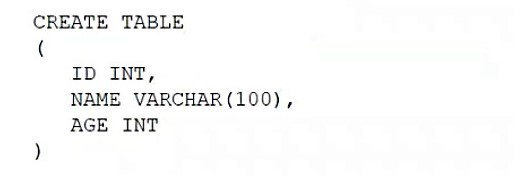
B)
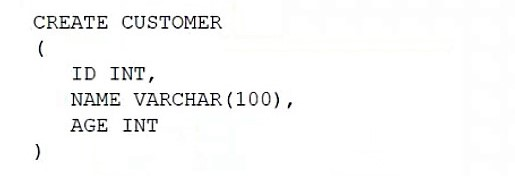
C)
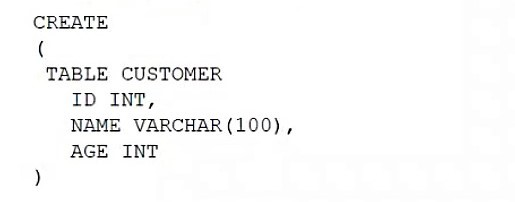
D)
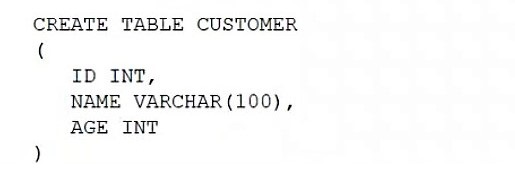
A database administrator needs to provide access to data from two different tables to multiple group users in order to facilitate ongoing reporting. However, some columns in each table are restricted, and users should not be able to see the values in these columns.
Which of the following is the best action for the administrator to take?
Which of the following resources is the best way to lock rows in SQL Server?
Which of the following best describes the category of SQL commands required to revoke access to database objects?
Get access to all 80 verified questions with detailed answers.
Unlock All DS0-001 Questions