H12-711_V4.0 Exam Questions & Answers
HCIA-Security V4.0 • Huawei
100% money-back guarantee
About H12-711_V4.0 Exam
The H12-711_V4.0 HCIA-Security V4.0 certification exam is Huawei's entry-level security credential designed for IT professionals seeking to validate their foundational knowledge in network security. This comprehensive exam covers essential security topics including firewall configuration, VPN technologies, intrusion detection and prevention systems, access control, encryption protocols, and security policy implementation. Candidates will demonstrate proficiency in deploying and managing Huawei security solutions across various network environments. The H12-711_V4.0 exam serves as the ideal stepping stone for professionals aiming to advance their careers in cybersecurity and network protection, making it increasingly valuable in today's threat-laden digital landscape.
IT professionals, network engineers, and security administrators preparing for this certification should leverage updated exam dumps and comprehensive practice tests to maximize their success rate. High-quality study materials provide real exam scenarios, challenging questions, and detailed explanations that reinforce key concepts and help candidates identify knowledge gaps before test day. By utilizing authentic H12-711_V4.0 practice tests alongside official Huawei training resources, candidates can build confidence, improve time management skills, and understand the exam's specific format and question types. These supplementary tools significantly enhance preparation effectiveness, allowing professionals to achieve their certification goals while developing practical security expertise applicable to real-world infrastructure challenges.
Exam Topics & Objectives
4-Week Study Plan for H12-711_V4.0
Week 1: Foundation & Threats
- Study Network Security Concepts and Specifications (5%) - review OSI model, TCP/IP stack, security fundamentals
- Complete Network Basics (10%) - master IP addressing, subnetting, routing protocols, DNS, DHCP
- Learn Common Network Security Threats and Threat Prevention (5%) - identify malware, DDoS, man-in-the-middle, social engineering attacks
- Practice identifying threat types and appropriate mitigation strategies
- Complete practice quiz on Week 1 topics with minimum 80% score
Week 2: Firewall Fundamentals & Policies
- Study Firewall Security Policies (10%) - understand stateful inspection, packet filtering, access control lists
- Learn policy creation, rule ordering, and best practices
- Master Firewall NAT Technologies (10%) - study static NAT, dynamic NAT, PAT, NAT exemptions
- Practice configuring basic firewall rules and NAT translations
- Complete hands-on labs for firewall policy configuration
- Review security policy design principles and documentation standards
Week 3: Advanced Firewall Features & Encryption Basics
- Study Firewall Hot Standby Technologies (10%) - master VRRP, active-passive failover, synchronization
- Learn Firewall IPS (10%) - understand intrusion detection/prevention signatures, anomaly detection, protocol analysis
- Configure IPS policies and understand performance impact
- Begin Fundamentals of Encryption and Decryption Technologies (10%) - study symmetric encryption, asymmetric encryption, hash functions
- Learn DES, 3DES, AES, RSA, MD5, SHA algorithms
- Complete practice exam sections on firewall technologies with 75%+ passing score
Week 4: PKI, Encryption Applications & Final Review
- Study PKI Certificate System (5%) - understand X.509 certificates, CA hierarchy, CRL, OCSP
- Learn certificate lifecycle and management
- Master Encryption Technology Applications (15%) - study IPSec, SSL/TLS, VPN, encrypted protocols
- Understand encryption in authentication and digital signatures
- Review all exam domains with emphasis on weak areas
- Take full-length practice exam and score minimum 75%
- Review exam objectives and verify coverage of all topics
- Study exam questions and time management strategies
Sample H12-711_V4.0 Questions
Practice with real exam-style questions. Reveal answers to verify your knowledge.
The RADIUS protocol specifies how to pass user information, billing information, authentication and billing results between the NAS and the RADIUS server, and the RADIUS server is responsible for receiving the user's connection request, completing the authentication, and returning the result to the NAS.
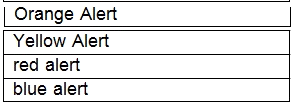
Drag the warning level of the network security emergency response on the left into the box on the right, and arrange it from top to bottom in order of severity.[fill in the blank]*
Which of the following protocols is a multichannel protocol?
What is the protocol number of the GRE protocol?
Among the various aspects of the risk assessment of IS027001, which of the following does not belong to the system design and release process?
Get access to all 91 verified questions with detailed answers.
Unlock All H12-711_V4.0 Questions