Limited-Time Offer: Enjoy 50% Savings! - Ends In 0d 00h 00m 00s Coupon code: 50OFF
Free Exam Questions

DP-420 Exam Questions & Answers

Designing and Implementing Cloud-Native Applications Using Microsoft Azure Cosmos DB  •  Microsoft

194 Questions 100 min Updated Jul 2026 99% Pass Rate
Get Full Access

100% money-back guarantee

About DP-420 Exam

The DP-420 certification exam by Microsoft validates your expertise in designing and implementing cloud-native applications using Azure Cosmos DB. This advanced certification is ideal for database developers, cloud architects, and solution engineers who want to demonstrate proficiency in building scalable, globally distributed applications. The exam covers essential topics including data modeling, implementing data distribution strategies, optimizing query performance, managing security and compliance, and implementing change feeds and analytical solutions. Candidates must showcase their ability to design efficient database schemas, implement proper partitioning strategies, and leverage Cosmos DB's multi-model capabilities across SQL, MongoDB, and other APIs.

To excel in the DP-420 exam, candidates benefit significantly from comprehensive exam dumps and practice tests that simulate real-world scenarios. These resources help you identify knowledge gaps, understand the exam's question format, and build confidence before test day. Updated exam dumps provide insights into current question patterns and difficulty levels, while practice tests allow hands-on experience with Cosmos DB features. By combining official Microsoft learning paths with quality practice materials, you can effectively prepare for this challenging certification and advance your career in cloud database development and architecture.

Exam Topics & Objectives

Design and Implement Data Models
35-40%
Design and Implement Data Distribution
5-10%
Integrate an Azure Cosmos DB Solution
5-10%
Optimize an Azure Cosmos DB solution
15-20%
Maintain an Azure Cosmos DB Solution
25-30%

4-Week Study Plan for DP-420

Week 1: Data Model Fundamentals and Design Patterns

  • Study document structure and hierarchical data modeling in Azure Cosmos DB
  • Learn denormalization vs normalization trade-offs for NoSQL databases
  • Practice designing schemas for common scenarios (e-commerce, IoT, social media)
  • Review partition key selection strategies and their impact on data models
  • Complete hands-on lab: Create 3 different document models and evaluate query performance
  • Study embedding vs referencing patterns and when to use each approach
  • Review Microsoft Learn module on "Design non-relational data models"
  • Take practice quiz on data modeling concepts (target: 85%+)

Week 2: Data Distribution, Partitioning, and Global Scale

  • Master partition key design including synthetic and hierarchical keys
  • Study logical and physical partitions and their relationship to throughput
  • Learn multi-region replication and conflict resolution strategies
  • Practice designing globally distributed solutions with read and write regions
  • Complete lab: Implement multi-region failover and test consistency levels
  • Study request units (RU) and how partition distribution affects throughput
  • Review geo-replication patterns and latency considerations
  • Analyze case studies on partition key anti-patterns and optimization
  • Take practice exam focused on distribution (target: 80%+)

Week 3: Integration, Querying, and Application Development

  • Study Azure Cosmos DB SDKs (SQL API focus) for .NET, Python, and JavaScript
  • Practice writing complex SQL queries including joins, aggregations, and subqueries
  • Learn change feed implementation and event-driven architectures
  • Study Azure Functions integration with Cosmos DB triggers and bindings
  • Complete lab: Build an application using SDK with CRUD operations and transactions
  • Practice implementing stored procedures and user-defined functions
  • Review indexing policies and their impact on query performance
  • Study batch operations and bulk import/export scenarios
  • Take integration-focused practice exam (target: 80%+)

Week 4: Optimization, Maintenance, and Final Preparation

  • Master monitoring metrics: RU consumption, storage, latency, and availability
  • Study performance tuning techniques including index optimization and query optimization
  • Learn backup and restore strategies, point-in-time recovery, and disaster recovery
  • Practice troubleshooting common issues: throttling, latency, and consistency problems
  • Complete lab: Monitor a Cosmos DB instance and identify optimization opportunities
  • Review security features: encryption, authentication, network security, and compliance
  • Study TTL (time-to-live), automatic tiered storage, and cost optimization
  • Take full-length practice exams (minimum 2, target: 85%+ on each)
  • Review weak areas identified from practice tests
  • Study 10 real-world scenario questions from exam dumps

Sample DP-420 Questions

Practice with real exam-style questions. Reveal answers to verify your knowledge.

Q1 MultipleChoice

You have an Azure subscription that contains an Azure Cosmos DB for NoSQL account named accounts In account1, you create a container that has the following configurations:

* Partition key: CompanylD

* Composite unique key: UserName and EmailAddress

To the container, you plan to add the data items shown in the following table.
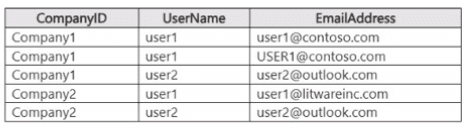
How many conflicts will occur?

Q2 MultipleChoice

You have an application named App1 that reads the data in an Azure Cosmos DB Core (SQL) API account. App1 runs the same read queries every minute. The default consistency level for the account is set to eventual.

You discover that every query consumes request units (RUs) instead of using the cache.

You verify the IntegratedCacheiteItemHitRate metric and the IntegratedCacheQueryHitRate metric. Both metrics have values of 0.

You verify that the dedicated gateway cluster is provisioned and used in the connection string.

You need to ensure that App1 uses the Azure Cosmos DB integrated cache.

What should you configure?

Q3 MultipleChoice

You have an Azure Cosmos DB for NoSQL database that hosts a container named Container1 For Container1. the DefaultTimeToLive property is -1.

You insert an item into Container1. The property of the inserted item is 10O0. When will the item be deleted automatically?

Q4 MultipleChoice

You have an Azure Cosmos DB for NoSQL account that contains a database named DB1. Users run the following query against DB1.
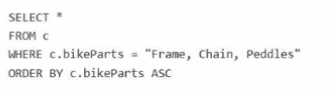
You add an index to the recordset.

You need to change the ORDER by syntax of the query to optimize the use of the index. The solution must NOT change the result set.

Which syntax should you use?

Which syntax should you use?

Q5 MultipleChoice

You have an Azure Cosmos DB account that hosts a single container named Container1. Container1 contains items that include two properties named Tenantld and Userld. Container1 has logical partitions based on the Tenantld property.

You need to configure subpartitioning for Container1 based on the Userld property. The solution must maximize data availability.

What should you do first?

Get access to all 194 verified questions with detailed answers.

Unlock All DP-420 Questions

Frequently Asked Questions

The DP-420 exam is a Microsoft certification test that validates your ability to design and implement cloud-native applications using Azure Cosmos DB. It covers database design, data modeling, query optimization, and implementing security and compliance in Cosmos DB environments.

The DP-420 exam is ideal for developers, data engineers, and solutions architects who work with Azure Cosmos DB and want to demonstrate their expertise in designing and implementing NoSQL database solutions. It's recommended for professionals with at least one year of experience working with Cosmos DB or similar distributed database technologies.

The exam covers Azure Cosmos DB fundamentals, data modeling and partitioning strategies, implementing queries and transactions, managing indexes, implementing security and compliance, and monitoring and troubleshooting Cosmos DB applications. It also includes topics on optimizing performance, implementing change feeds, and designing multi-region solutions.

The DP-420 exam typically lasts 120 minutes and contains approximately 40-60 questions in various formats including multiple-choice, drag-and-drop, and scenario-based questions. The exact number and format may vary based on the exam version.

Microsoft does not publicly disclose the exact passing score for the DP-420 exam, but it generally requires a score of around 700 out of 1000 to pass. Your performance is evaluated on a scale, and you'll receive detailed results showing your strengths and areas for improvement after completing the exam.
Exam Details
  • Exam CodeDP-420
  • VendorMicrosoft
  • Total Questions194
  • Duration100 min
  • LanguageEnglish
  • Last UpdatedJul 20, 2026
4.9/5

Pass DP-420 First Time

Get all 194 exam questions with verified answers and 90-day free updates.

Buy Now & Pass
  • PDF + Practice Test Bundle
  • 90-Day Free Updates
  • 100% Money-Back Guarantee
  • Instant Download
  • 24/7 Customer Support
99% Pass Rate Trusted by 50,000+ IT professionals