B2C-Commerce-Architect Exam Questions & Answers
Salesforce Certified B2C Commerce Architect • Salesforce
100% money-back guarantee
Sample B2C-Commerce-Architect Questions
Practice with real exam-style questions, each with the verified correct answer and explanation.
a clientuses an external marketing toot to manage promotions and coupons for its multiple brands. They currently have only one brand on B2C Commerce and thev get Import-ready feeds created by this tool on en SFTP location.
The marketing team completes the data preparation by the end of the work day.
How should the Architect handle this import?
To handle the import of promotion and coupon data from an SFTP location, the best approach is to create a job consisting of three steps as described in option C. The first step involves a custom script to download the files from the SFTP server---this is necessary because file retrieval from external servers typically requires specific connectivity and security configurations that are best handled in a custom-coded step. The subsequent two steps would utilize standard Salesforce B2C Commerce job steps to import the downloaded promotion and coupon data into the platform. This method ensures that the data flow is streamlined, from retrieval through to integration into the Commerce platform.
The client provided these business requirements:
* The B2C Commerce storefront will integrate with the client's Order Management System (OMS).
* The storefront will provide reel-time order export of successfully pieced orders
The OMS supports both web service export end SFTP batch order export, but the client has expressed concern about the availability of the OMS.
Which two solutions satisfy the requirements and address the OMS reliability concern?
Choose 2 answers
Given the concerns about the reliability of the OMS, implementing scheduled batch exports ensures that order data is not lost due to potential OMS downtime and allows for reattempting failed exports. Option B uses SFTP for a high-frequency batch export, which can be scheduled to run multiple times a day, ensuring minimal delay in order synchronization while marking orders as exported upon successful transmission. Option C provides a similar safeguard but via web service, which can be scheduled to run hourly. Both methods enable tracking of export status and can handle temporary downtimes by reattempting the export until successful, aligning with the need for reliability in integration processes.
A third party survey provider offers both an API endpoint for individual survey data and an SFTP server endpoint that can accept batch survey dat
a. The initial implementation of the integration includes
1.Marking the order as requiring a survey before order placement
2. On the order confirmation pace, the survey form is displayed for the customer to fill
3. The data is sent to the survey provider API, and the order it marked as not requiring a survey
Later it was identified that this solution is not fit for purpose as the following issues and additional requirements were identified:
1. If the API call fails, the corresponding survey data is lost. The Business requires to avoid data loss.
2. Some customers skipped the form. The Business require sending a survey email to such customers.
3. The Order Management System (OMS) uses a non-standard XML parser it did not manage to parse orders with the survey, until the survey attribute was manually removedfrom the xml.
How should the Architect address the issues and requirements described above?
This approach addresses all concerns: data retention, reattempt on failure, and follow-up communication. By storing survey data in a custom object, data is preserved even if the API call fails, allowing for reprocessing. This method also facilitates sending follow-up emails by querying custom objects for surveys that were skipped, ensuring comprehensive coverage and reliability in data handling and customer engagement.
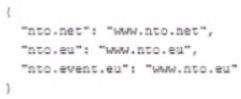
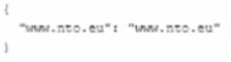
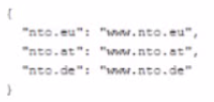
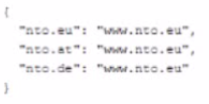
A client has a single site with multiple domains, locales, and languages. Afterlaunch, there is a need for the client to perform offline maintenance. The client would like to show the same maintenance page for each locale.
Which version of aliases,Json file below will accomplish this task?
A)
B)
C)
D)
During a review of the most recent release notes, the Architect finds that Salesforce has deprecated an API that is used throughout the site. After reviewing the deprecated API usage in Business Manager, the Architect narrows down the usage of that API to a particular LINK integration cartridge. The cartridge was integrated when the site was first launched and is heavily customized for the Client.
What is the recommended way for the Architect to remove the deprecated API so the LINK integration continues to work without interruptions, and lowest level of effort'
When facing a deprecated API that is used in a LINK integration cartridge, the recommended approach is to check for an updated version of the cartridge that may have replaced the deprecated API with a supported one. If an update is available:
Integrate the updated cartridge into the site, ensuring compatibility with the current site configuration.
Re-apply customizations that were made to the original cartridge to maintain functional consistency.
Thorough testing should be conducted to ensure that the integration works seamlessly without causing disruptions in the site's functionality.
This approach minimizes effort by leveraging updates provided by the cartridge vendor while ensuring the site remains functional and compliant with current API standards.
Get access to all 64 verified questions with detailed answers.
Unlock All B2C-Commerce-Architect Questions