Salesforce-MuleSoft-Developer-I Exam Questions & Answers
Salesforce Certified MuleSoft Developer • Salesforce
100% money-back guarantee
About Salesforce-MuleSoft-Developer-I Exam
The Salesforce Certified MuleSoft Developer-I certification exam validates your expertise in designing, building, and deploying integration solutions using the MuleSoft Anypoint Platform. This comprehensive certification covers essential topics including API design and implementation, data transformation, error handling, security protocols, and deployment strategies. Candidates must demonstrate proficiency in creating scalable, secure, and maintainable integrations that connect cloud and on-premises systems. The exam is ideal for integration developers, solutions architects, and IT professionals seeking to advance their careers in enterprise integration and API management within the Salesforce ecosystem.
To successfully prepare for the Salesforce-MuleSoft-Developer-I exam, candidates should leverage updated exam dumps and comprehensive practice tests that align with the latest exam objectives. These study materials provide realistic exam scenarios, detailed explanations, and performance metrics that help identify knowledge gaps. Practice tests simulate the actual exam environment, building confidence and improving time management skills. By combining hands-on experience with the Anypoint Platform with well-structured study resources, candidates can thoroughly master core competencies including API-led connectivity, data mapping, and deployment configurations, significantly increasing their chances of passing the certification on the first attempt.
Exam Topics & Objectives
4-Week Study Plan for Salesforce-MuleSoft-Developer-I
Week 1: Foundations and Core Concepts
- Study Creating Application Networks (7%) - Review Anypoint Platform architecture, API-led connectivity patterns, and application network design principles
- Understand Designing APIs (8%) - Learn RESTful API design, API specifications using RAML/OpenAPI, and API versioning strategies
- Explore Structuring Mule applications (10%) - Master project structure, Maven configuration, pom.xml setup, and mule-artifact.json files
- Introduction to Using Connectors (10%) - Review HTTP, File, Database connectors and connector configuration basics
- Complete hands-on lab: Create a basic Mule project with HTTP connector and simple API endpoint
- Take practice quiz on Week 1 topics (score target: 80%)
Week 2: Data Processing and Transformation
- Deep dive into Transforming data with DataWeave (10%) - Study DataWeave 2.0 syntax, operators, functions, and type coercion
- Learn Accessing and modifying Mule events (10%) - Understand event structure, payload, attributes, variables, and MEL expressions
- Study Processing Records (10%) - Master Batch Job scope, batch processing patterns, and record-level operations
- Advanced Using Connectors (10%) - Focus on complex connectors like Salesforce, SAP, and custom connector development
- Complete hands-on labs: DataWeave transformations with nested objects, batch processing with database records
- Practice exercises: Transform complex JSON/XML data, modify event payloads, implement batch operations
- Take practice quiz on Week 2 topics (score target: 80%)
Week 3: Flow Control and Error Handling
- Master Routing events (8%) - Study Choice router, Scatter-Gather, For Each scope, flow control patterns
- Deep dive into Handling errors (8%) - Learn error handling strategies, try-catch patterns, error propagation, custom error types
- Study Building API implementation interfaces (7%) - Design API implementations, request/response mapping, backend integration patterns
- Introduction to Debugging and troubleshooting (5%) - Review Anypoint Studio debugging tools, logs analysis, breakpoints
- Complete hands-on labs: Implement complex routing logic, error handling with custom error responses, API implementation with routing
- Practice scenarios: Handle timeout errors, route based on payload conditions, implement fallback flows
- Take practice quiz on Week 3 topics (score target: 80%)
Week 4: Deployment, Integration, and Exam Preparation
- Master Deploying and managing APIs and integrations (7%) - Study CloudHub deployment, on-premises deployment, API management, monitoring, and policies
- Advanced Debugging and troubleshooting (5%) - Deep dive into application logs, monitoring dashboards, performance troubleshooting
- Integration review - Practice end-to-end scenarios combining application networks, APIs, transformations, and error handling
- Complete comprehensive practice exams (minimum 3 full-length tests, score target: 85%+)
- Review weak areas from practice exams and retake targeted practice tests
- Study official Salesforce MuleSoft documentation for any remaining gaps
- Review exam format, time management strategies, and question types
- Final review of all 12 exam topics with focus on integration scenarios and real-world applications
Sample Salesforce-MuleSoft-Developer-I Questions
Practice with real exam-style questions. Reveal answers to verify your knowledge.
How we can scale deployed Mule application vertically on cloudhub?
By default, what happens to a file after it is read using an FTP connector Read operation?
A REST connect module is generated for a RAML specification. and then the rest connect module is imported in mule application in Anypoint Studio. For each method of the RAML specification , what does the REST connect module provide?
A function named newProdCode needs to be defined that accepts two input parameters, an integer value for itemID and a string value for productCategory, and returns a new product code.
What is the correct DataWeave code to define the newProdCode function?
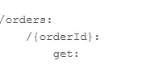
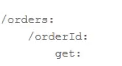
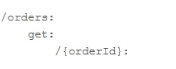
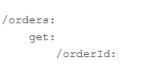
What valid RAML retrieves details on a specific by its orderld as a URL parameter?
A)
B)
C)
D)
Get access to all 235 verified questions with detailed answers.
Unlock All Salesforce-MuleSoft-Developer-I Questions