JN0-637 Exam Questions & Answers
Security, Professional • Juniper
100% money-back guarantee
About JN0-637 Exam
The JN0-637 Security, Professional certification exam represents Juniper Networks' advanced credential for security professionals seeking to validate their expertise in implementing and managing Juniper security solutions. This comprehensive exam covers critical topics including advanced firewall configuration, intrusion detection and prevention systems (IDS/IPS), threat intelligence integration, secure sockets layer (SSL) inspection, and advanced routing security protocols. Candidates preparing for the JN0-637 must demonstrate proficiency in deploying sophisticated security architectures and troubleshooting complex security challenges in enterprise environments. This certification is ideal for experienced security engineers, network administrators, and IT professionals who work with Juniper SRX firewalls and security platforms and want to advance their career credentials in network security.
Effective preparation for the JN0-637 exam requires access to quality study materials and hands-on practice opportunities. Updated exam dumps and comprehensive practice tests serve as invaluable resources for candidates, helping them identify knowledge gaps, build confidence, and familiarize themselves with the actual exam format and question types. These practice materials allow professionals to simulate real-world scenarios and test their understanding of complex security concepts before attempting the actual certification exam. By combining official Juniper training resources with updated practice tests and dumps, candidates significantly increase their chances of passing the JN0-637 on their first attempt and establishing themselves as certified Juniper security professionals.
Exam Topics & Objectives
4-Week Study Plan for JN0-637
Week 1: Foundation and Policy Management
- Study Troubleshooting Security Policies fundamentals: policy evaluation order, implicit deny rules, and policy matching criteria
- Review Security Zones configuration: intra-zone policies, inter-zone policies, and zone-based traffic filtering
- Practice creating and modifying security policies with zone specifications using Junos CLI
- Lab exercise: Configure multiple security zones and create policies to control traffic between zones
- Study common policy troubleshooting issues: rule conflicts, logging configuration, and traffic matching failures
- Review zone-based security best practices and policy optimization techniques
- Complete practice questions on policy evaluation and zone configuration
- Document key policy commands and zone parameters for quick reference
Week 2: System Architecture and Layer 2 Security
- Study Logical Systems architecture: resource isolation, independent routing instances, and administrative domains
- Learn Tenant Systems concepts: multi-tenant deployment models and traffic separation
- Practice configuring logical systems with independent security policies and zones
- Lab exercise: Configure a logical system with dedicated security zones and policies
- Study Layer 2 Security features: VLAN security, MAC-based access control, and bridge domain filtering
- Review ARP protection mechanisms and MAC limiting techniques
- Lab exercise: Implement Layer 2 security controls including MAC authentication and VLAN protection
- Practice troubleshooting Layer 2 security policy violations and traffic flow issues
Week 3: Advanced Network Services and VPN Technologies
- Study Advanced NAT concepts: source NAT, destination NAT, static NAT, and NAT rule ordering
- Learn PAT (Port Address Translation) configuration and troubleshooting techniques
- Practice configuring complex NAT scenarios with multiple address pools and policy integration
- Lab exercise: Implement bidirectional NAT with overlapping address spaces
- Study Advanced IPsec VPN fundamentals: phase 1 and phase 2 negotiation parameters
- Review IKE and IPsec encryption algorithms, authentication methods, and perfect forward secrecy (PFS)
- Practice configuring site-to-site VPN tunnels with advanced security parameters
- Lab exercise: Troubleshoot IPsec VPN tunnel establishment failures and traffic flow issues
Week 4: Policy Routing, High Availability, and Threat Mitigation
- Study Advanced Policy-Based Routing (APBR): routing decisions based on security policies and traffic characteristics
- Learn APBR implementation with zone-based routing and traffic differentiation
- Practice configuring APBR rules for traffic steering and load balancing scenarios
- Lab exercise: Implement APBR to route traffic through different security zones based on source/destination criteria
- Study Multinode High Availability (HA) architecture: active-passive and active-active cluster configurations
- Review cluster communication, heartbeat mechanisms, and failover triggers
- Practice configuring HA cluster parameters and monitoring cluster health
- Lab exercise: Set up a two-node HA cluster and test failover scenarios
- Study Automated Threat Mitigation features: DDoS protection, rate limiting, and behavioral analysis
- Learn threat detection mechanisms and automated response actions
- Practice configuring threat mitigation policies and monitoring threat events
- Complete full-length practice exam covering all eight topics
- Review weak areas and retake targeted practice questions
Sample JN0-637 Questions
Practice with real exam-style questions. Reveal answers to verify your knowledge.
Which two statements are true regarding NAT64? (Choose two.)
Which two statements are correct about DNS doctoring?
Referring to the exhibit, you are attempting to set up a remote access VPN on your SRX series devices.
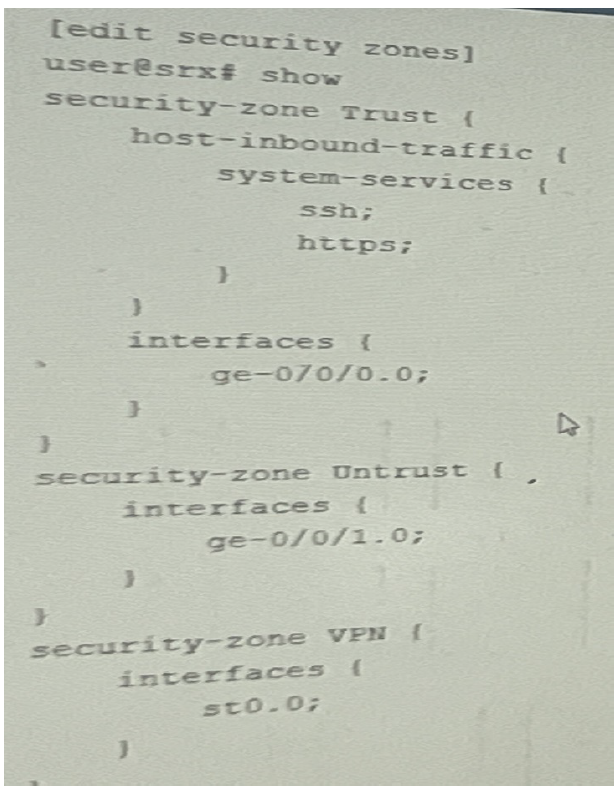
However you are unsure of which system services you should allow and in which zones they should be allowed to correctly finish the remote access VPN configuration
Which two statements are correct? (Choose two.)
You Implement persistent NAT to allow any device on the external side of the firewall to
initiate traffic.
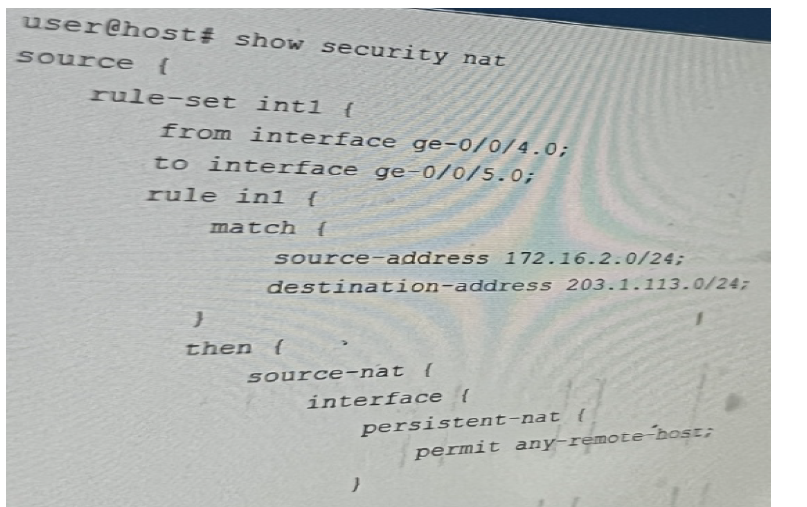
Referring to the exhibit, which statement is correct?
Exhibit:
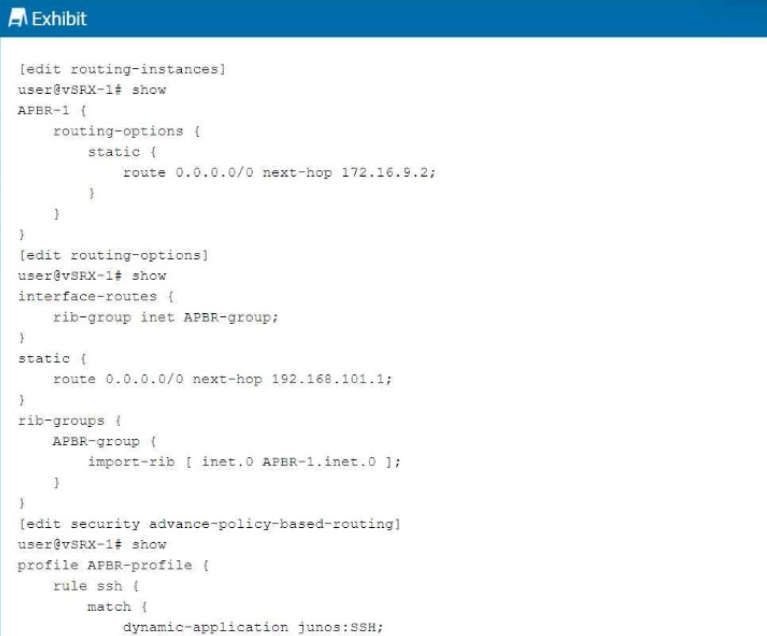
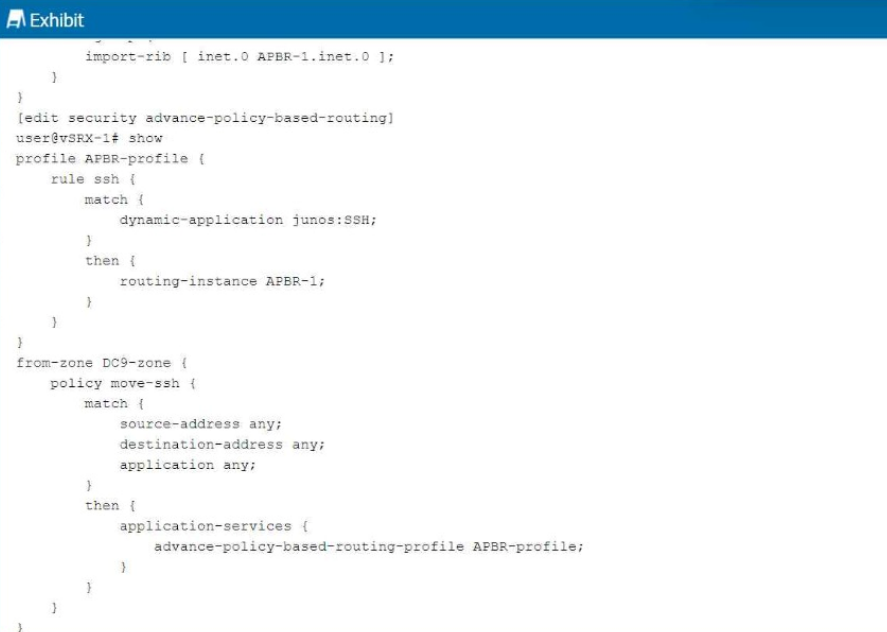
You are having problems configuring advanced policy-based routing.
What should you do to solve the problem?
Get access to all 115 verified questions with detailed answers.
Unlock All JN0-637 Questions